Hello everyone, a newcomer reporting from Spain! Recently, chatting with friends, I stumbled upon an interesting term — “Dongyuan Ham.” It seems many newcomers have heard or used this term. I was curious: what exactly is this “Dongyuan Ham”? How does it relate to the high-end Spanish hams we often see on TV or in articles? Today, I want to start a discussion on this topic, and if I get anything wrong, I welcome corrections from experts!
Actually, I spent quite some time in Spanish supermarkets and ham specialty stores, asked local friends, and researched extensively. I found that in the official classification of Spanish hams, there is no such term as “Dongyuan.” This difference between Spanish hams is likely a misconception or possibly refers to a specific brand. More often, it has become a nickname for Jamón Serrano. Serrano ham is made from white pig legs, produced in large quantities and budget-friendly. It is the most common ham consumed by ordinary Spanish families. The taste is salty and savory, but the flavor is relatively simple, and the texture tends to be drier and firmer.
So what is the top-tier Spanish ham we usually think of? That would be the national treasure, the Ibérico ham! This is the true king. It comes from Spain’s unique, noble-blooded Iberian black-hoofed pig. Especially the highest grade, “Bellota,” where pigs roam freely in oak forests feeding on acorns. Therefore, imported Spanish ham differences the meat carries a unique nutty aroma, the fat marbles through the muscle like marble patterns, melts in your mouth, and leaves an unforgettable aftertaste.
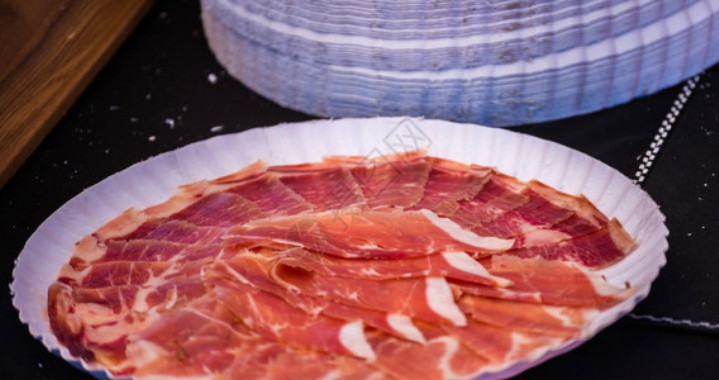
Quick Comparison: Serrano vs. Ibérico
To help everyone understand more intuitively, I created a simple table comparing these two main types of Spanish hams:
| Feature | Serrano Ham | Ibérico Ham |
|---|
| Pig Breed | Ordinary white pig | Iberian black-hoofed pig |
| Raising Method | Confined, fed grain feed | Free-range or semi-free-range, top-tier fed acorns |
| Hoof Color | White | Black |
| Fat Distribution | Less, leaner, pale color | Rich, marbled, yellowish color |
| Curing Time | Usually 9-15 months | Usually 24-48 months or longer |
| Price | Affordable | Expensive |
So next time you go to the supermarket to buy ham, you’ll know how to choose. For everyday eating, cooking, or pairing with melon, Jamón Serrano is enough and very cost-effective. If you want to experience the essence of Spanish ham or give gifts for holidays, look for the Jamón Ibérico, especially the de Bellota 100% Ibérico label. Check the hoof color and label carefully, and you’ll never waste money on the wrong ham again! Which type of ham do you usually prefer? Any recommended brands or ways to enjoy it? Let’s share and discuss!
