When I first arrived in Spain, every time I visited the supermarket and saw rows of spectacular ham legs, I was utterly dazzled. At first, I thought ham was all the same—just pig legs rubbed with salt and air-dried. It wasn’t until I visited an Italian friend and tasted the legendary Parma ham that I suddenly realized this delicacy is completely different from our Spanish national treasure, Jamón, in terms of flavor! Today, from the perspective of an ordinary foodie, I’ll talk about what exactly distinguishes these two “legs”.
1. Pig Breeds: Origins Define Everything
As the saying goes, good pigs make good ham. The biggest difference between these two hams lies in the pig breeds and their raising methods. Spain’s top-tier Iberian ham uses the prized Iberian black hoof pig. These pigs are freely pasture-raised at Dehesa farms; especially the highest grade “Bellota” pigs, which feed on acorns during their last months of life, giving the ham its unique nutty aroma and melt-in-the-mouth fat. Italian Parma ham uses specific breeds of white pigs such as Large White or Duroc, typically raised in pens and fed on grains and whey leftover from Parmesan cheese production.
2. Production Process: The Art of Time
In terms of production, both are salted and air-dried, but differ greatly in details and duration. Spanish ham curing times are generally longer; an Iberian ham typically requires 24 to 48 months or even more to mature, using exclusively sea salt. The extended aging allows flavor compounds to fully develop, resulting in a richer, more complex taste. Parma ham matures for a relatively shorter period, usually between 12 to 24 months. Besides salt, sometimes a mixture containing pork fat is applied to parts of the surface to prevent excessive drying, which is why imported Spanish ham differences Parma ham has a moister, softer texture.
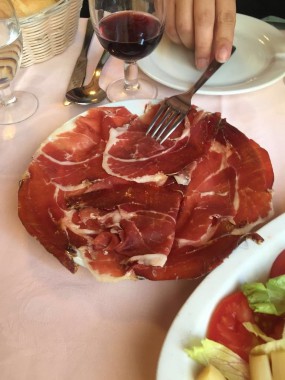
3. Flavor and Texture: A Battle on the Palate
After all this, the most important question is, how do they taste? Spanish Iberian ham offers a very intense, layered flavor with a distinctive nutty aroma and a long finish. The fat part is especially aromatic and melts in your mouth, oily yet not greasy. Parma ham leans more toward a balance of salty and sweet, with a silky, delicate texture. The meat is very tender, with notable fruity notes. To facilitate understanding, here is a simple comparison table:
| Feature | Spanish Iberian Ham | Italian Parma Ham |
|---|
| Pig Breed | Iberian black hoof pig | Specific white pig breeds |
| Feed | Acorns, natural pasture | Grains, whey |
| Curing Time | 24-48+ months | 12-24 months |
| Flavor | Rich, nutty, long finish | Salty-sweet, fruity, fresh |
| Texture | Firm meat, oily fat | Tender meat, silky texture |
Neither of these hams is absolutely better or worse; they are like Cabernet Sauvignon and Pinot Noir in the wine world—each with unique qualities and flavors. Regarding eating methods, Spaniards believe the top-grade Iberian ham should be sliced fresh and eaten as is, paired at most with a small piece of bread or a glass of sherry to appreciate its pure flavor. Parma ham is more versatile, classically served with melon, cheese, figs, or sandwiched in bread as paninis. Which one do you prefer? Feel free to share your thoughts below!
