When I first arrived in Spain, I was a novice with ham and thought, isn’t it just cured meat? How different could it really be? Until one time, a friend brought a French Bayonne ham to a gathering and placed it alongside Spanish Iberian ham, I realized these two are completely different! Today, I’ll share from the perspective of an ordinary food lover the exact differences between these two top European hams.
Core Differences: The Pig’s “Origin” and “Diet”
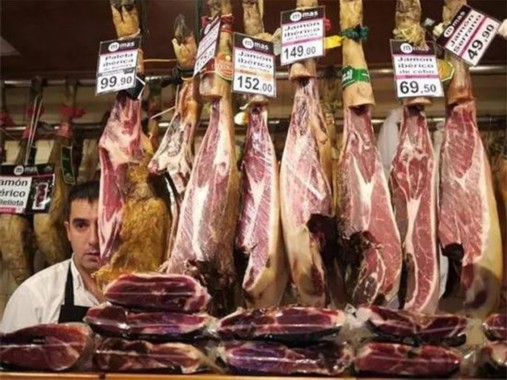
This could be said to be the most fundamental difference. Spain’s premium Iberian ham comes from the purebred Iberian black hoof pig. Especially the highest grade “Bellota,” whose pigs are semi-wild free-ranging in oak forests, feeding mainly on acorns. This is why Spanish ham vs Eastern-origin ham differences the meat carries a unique nutty aroma and evenly marbled, melt-in-the-mouth fat. In contrast, French ham, such as the famous Bayonne ham, generally uses common white pig breeds that are mostly barn-raised and fed grains and feed. Thus, from the source, genetics and diet decisively shape the huge flavor differences.
Production Process: The Art of Time
The manufacturing processes are also very different. Spanish ham curing and drying takes a famously long time. An Iberian ham typically matures for 24 to 48 months or even longer. This extended natural drying results in a flavor that is extraordinarily rich, mellow, and complex. In comparison, French ham generally matures for 9 to 12 months only, which leads to a texture that is more tender, a flavor relatively straightforward and light, with saltiness more pronounced.
Taste and Flavor: One Bold, One Subtle
After all that, it comes down to taste. Spanish Iberian ham slices are deep red with translucent, silky fat. The flavor layers are very rich, with nutty, floral, and even aged sweet notes, leaving a lingering aftertaste. It is the kind of “addictive” gourmet that makes you unable to stop after one slice. French ham, on the other hand, has a pinker color with less fat, a softer and moister texture, and a pure salty and meaty aroma. It lacks the strong personality of Spanish ham but is an excellent choice as a Spanish ham difference cold cut or accompaniment.
To make it clearer, I created a simple comparison table:
| Feature | Spanish Ham | French Ham |
|---|
| Pig breed | Iberian black hoof pig | Common white pig |
| Feed | Acorns, natural pasture | Grains, feed |
| Curing Time | 24-48 months | 9-12 months |
| Color | Deep ruby red | Pink |
| Flavor | Rich, nutty, complex | Light, salty, straightforward |
| Price | Expensive | Relatively affordable |
Neither ham is absolutely better; they simply represent completely different styles. If you seek an ultimate, complex, and lingering experience, you must try Spanish Iberian ham. If you imported Spanish ham differences prefer fresh, direct saltiness or want to use it in cooking, French ham is also an excellent choice. Which ham do you like better? Feel free to leave your comments below!
