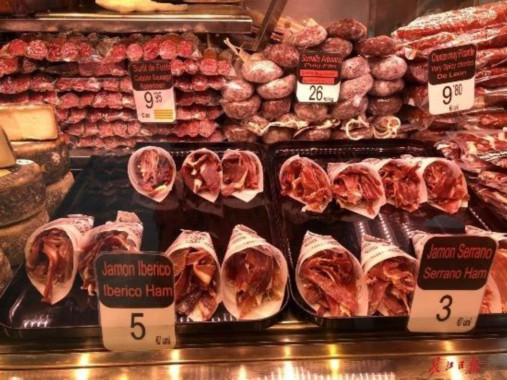
If you’re new to Spain, have you ever felt completely lost in the supermarket ham section like I did? Looking at rows of hanging hams, prices ranging from tens to thousands of euros, with names like Serrano, Ibérico, Bellota… it’s all so confusing. Today, based on years of foodie experience and mistakes, I’ll talk about the pinnacle of Spanish ham — the authentic acorn-fed Iberian ham, and check out what makes 5j Acorn Spanish Ham so expensive and delicious.
What Exactly Is “Acorn-Fed” Ham?
First, it’s important to clarify that not all hams labeled “Iberian” come from pigs fed on acorns. The truly acorn-fed ham must meet two strict conditions: the pig breed and the rearing method. The pig must be at least 50% purebred Iberian black hoof, a genetic trait that allows fat to marinate the muscle fibers, creating beautiful marbling. More importantly, in its final months, the pig must roam freely in southern Spain’s dehesa oak pastures, eating plenty of acorns and grass daily, gaining at least 46 kilograms. It is precisely these Spanish acorn ham grading standards that give the ham its unparalleled nutty aroma and melt-in-your-mouth texture.
How to Verify Authenticity and Grades? Understand the “Four-Color Tags”
To prevent dishonest sellers from passing off inferior products, the Spanish government enforces a strict “four-color tag” system on Iberian hams, visibly hung on the pig’s hoof for easy identification. When buying a whole leg or packaged ham, look for the color to know exactly what you’re getting:
| Tag Color | Spanish Name | Pig Purity | Rearing Method |
|---|
| Black | de Bellota 100% Ibérico | 100% Iberian black pig | Acorns and natural pasture |
| Red | de Bellota Ibérico | 50% or 75% Iberian pig | Acorns and natural pasture |
| Green | de Cebo de Campo Ibérico | 50% or 75% Iberian pig | Pasture plus grain feed |
| White | de Cebo Ibérico | 50% or 75% Iberian pig | Indoor farming, grain feed |
In short: black is the king, red is premium; these two are the true acorn-fed hams. Green and white hams, while still Iberian, have not undergone the acorn season “rite of passage,” and their flavor and price fall into a different tier.
Tasting Experience and Authentic Ways to Enjoy
Top-tier acorn-fed ham slices reveal meat deep red like ruby and fat white and translucent with captivating marbling. Here’s a small tip: always eat it at room temperature! This allows the fat to soften slightly and the aroma to fully release. Place a slice in your mouth; almost no chewing is needed. Its fat gently melts on your tongue, releasing a rich nutty fragrance, herbal notes, and a subtle salty finish that unfolds layer by layer with a long-lasting aftertaste. This experience, as described in Why Spanish Acorn Ham Is Expensive, is truly incomparable to ordinary hams. The most authentic way to enjoy it is pure, optionally paired with toasted bread slices or a glass of Spanish Rioja red wine; any extra seasoning would disrespect it.
Though pricey, acorn-fed ham is an indispensable part of experiencing Spanish culinary culture. During holidays or when friends visit, serving a plate of it carries significant ceremony. What color tags do you usually buy? Have you ever had any disappointments or found any hidden gems? Feel free to share your experiences in the comments!
