When I first arrived in Spain, I was always dazzled by the wide variety of hams in the supermarket. After chatting more with local friends, I discovered that a top-grade Spanish ham involves so many details behind it! Today, let’s talk about the origin of this deliciousness—the “life” of the Iberian pig and see how Spanish ham farming methods they are “raised”.
Not every pig qualifies to become Jamón Ibérico. The star must be the Iberian black pig , also commonly known as the “black hoof pig.” This breed has ancient lineage and unique genetics, allowing fat to evenly infiltrate the muscle fibers, which is the key for the marble-like fat and distinctive flavor of Iberian ham. Purebred Iberian black pigs are the finest choice .
The Happy Life of the Pig: Dehesa Woodland
Speaking of the Iberian pig’s living environment, it truly is the “aristocrat among pigs.” They aren’t confined in tight pens but instead freely roam in southwestern Spain’s unique “Dehesa” ecological pasture. This is a type of sparse woodland made up of oak, cork oak trees, and grassland, covering a vast area—one pig can have as much roaming space as two soccer fields!
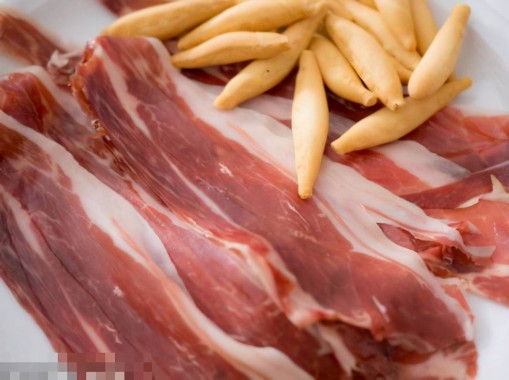
Every autumn, when acorns ripen, that’s the pig’s happiest “fattening season.” They frolic in the woods, mainly feeding on fallen acorns. The ample exercise combined with the natural acorn diet not only fills the pork with nutty aromas but also makes the fat healthier, rich in unsaturated fatty acids similar to olive oil.
The Ham’s “ID Card”: Classification Grades
Precisely because of differences in breeding methods and genetics, Spanish Iberian hams have very strict grading systems, usually distinguished by different colored labels. When buying, you can pay attention to:
| Label Color | Grade Name | Breeding and Genetic Requirements |
|---|
| Black | 100% Ibérico de Bellota | 100% purebred Iberian pig, free-range in woodland during acorn season, eat only acorns |
| Red | Ibérico de Bellota | 50% or 75% Iberian pig lineage, free-range in woodland during acorn season |
| Green | Cebo de Campo Ibérico | At least 50% lineage, pasture or field-raised, diet of grains and natural plants |
| White | Cebo Ibérico | At least 50% lineage, confined in pens, fed exclusively with grain feed |
This table makes it clear, no more fear of buying the wrong one! The black label is the highest acorn-fed ham.
So, a delicious Spanish ham is not just about curing and drying craftsmanship but stems from the exquisite pursuit of pig breed, living environment, and feed. This is Spanish ham farming location—a culinary culture blending nature, tradition, and craftsmanship. Next time you savor ham, won’t it have an added layer of flavor? What kind of labeled ham do you usually buy? Feel free to discuss below!
