When I first moved to Spain, I was always captivated by the diverse villas, especially their white, beige, and ochre walls basking in the Mediterranean sun—they have such a special charm. Recently, my own home has been due for an exterior renovation, and after some research, I discovered that there’s a surprising variety of exterior wall materials, and the choices are quite different from what I was used to back home. Factors like climate, cost, and aesthetics all come into play. Today, I’m starting this thread to share my findings and would love for other neighbors to chime in with their experiences!
The Most Common Choice: Cotegran / Mortero Monocapa
This is probably the most common exterior wall material for villas in Spain, technically known as ‘monolayer mortar.’ It’s a pre-mixed mortar that is applied directly to the wall and is already colored, so no additional painting is needed after completion.
The advantages are that it’s quick to apply, waterproof yet breathable, available in many colors, and relatively affordable. Many new townhouses and detached houses use it. The downside? Over time, fine cracks may appear, and if you need to patch a spot, there can be a color difference between the old and new material, which is a bit annoying.
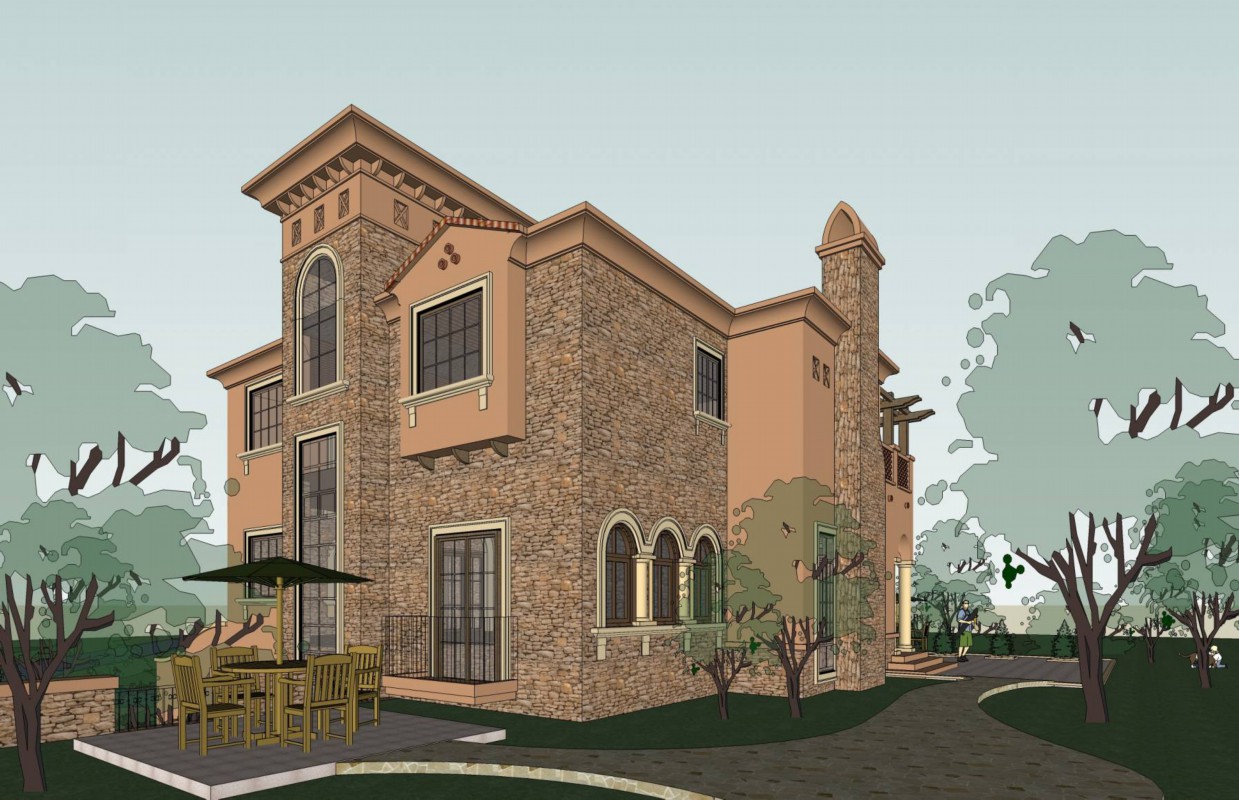
For a Premium Texture: Natural Stone
If you love a rustic style or want your house to look more ‘luxurious,’ then natural stone is definitely the top choice. The texture of stone is incomparable to any paint, and exterior stone cladding is extremely durable, offering excellent thermal and acoustic insulation. It’s common in the mountainous regions of the north or in some luxury coastal areas. Of course, the price is also the highest; not only is the material itself expensive, but it also requires skilled craftsmanship, which naturally drives up labor costs.
Classic & Rustic: Exposed Brick
Exposed brick is another classic choice, especially in Madrid and its surrounding areas. It gives a warm, solid feel. The biggest advantage is that it’s extremely durable and requires almost no maintenance—it can withstand sun, wind, and rain without issue. Unlike painted walls that need redoing every few years. However, the style is quite specific. People either love it or, for those who don’t, might find these Spanish villa exterior walls to have a bit of an ‘industrial’ look.
To give you a clearer picture, I’ve made a simple comparison table:
| Material Type | Pros | Cons | Approx. Cost |
|---|
| Cotegran | Affordable, fast application, many colors, waterproof | Prone to cracking, color mismatch on repairs | Low |
| Natural Stone | Beautiful, high-quality texture, very durable, insulating | Expensive, complex installation | High |
| Exposed Brick | Classic, maintenance-free, extremely durable | Fixed style, hard to change | Medium-High |
Ultimately, the choice of material depends on your personal budget and aesthetic preferences. For our home’s Spanish villa exterior walls, we’ll probably go with Cotegran for its great value. What materials are your exterior walls made of? Any pitfalls or experiences to share? Let’s discuss!
