When I first arrived in Spain, just like many friends, I was a complete ham novice. Seeing rows of legs hanging in the supermarket, whether it was Spanish Jamón or Italian Prosciutto, to me they all looked very similar, and I thought they were just “European Jinhua ham.” After staying longer in Spain and tasting more, I gradually discovered the world of difference between them. Today, from the perspective of an ordinary food lover, let’s talk about what exactly sets these two top-tier hams apart.
The Key Difference: The Pig and the Leg
To talk about the biggest difference, we must start from the source—the pig. Spain’s top-grade Iberian ham is made from the noble-blooded Iberian black-hoof pig. Especially those at the highest grade that are acorn-fed, the Dongyuan ham Spanish ham difference pigs freely roam in oak forests during their last few months, feeding on acorns. This gives the ham a unique nutty aroma. The most famous Italian Parma ham, on the other hand, is produced from specific white pig breeds like Duroc, mainly grain-fed. The difference in pig breeds and feed fundamentally determines the distinct flavors of these two hams, as explained in the Spanish ham ham difference. In production, Spanish ham is usually dry-cured with sea salt and undergoes long maturation periods, with some top grades aging over 36 months. Italian ham has a relatively shorter curing time, resulting in a fresher and slightly sweeter flavor.
Taste and Flavor Face-off
To make it clearer, I made a simple table comparing Spanish Iberian ham and Italian Parma ham as examples:
| Feature | Spanish Iberian Ham | Italian Parma Ham |
|---|
| Color | Crimson to deep red, fat appears semi-transparent | Pink, with snow-white fat |
| Flavor | Rich and complex, nutty aroma, lingering aftertaste | Salty and savory, straightforward flavor with a hint of sweetness |
| Texture | Oily, melts in the mouth, with a chewy meat quality | Soft, moist, silky smooth texture |
| Best Pairings | Enjoyed alone or with simple bread and red wine | Paired with melon, figs, cheese, or used in salads and pizzas |
How to Eat It Authentically?
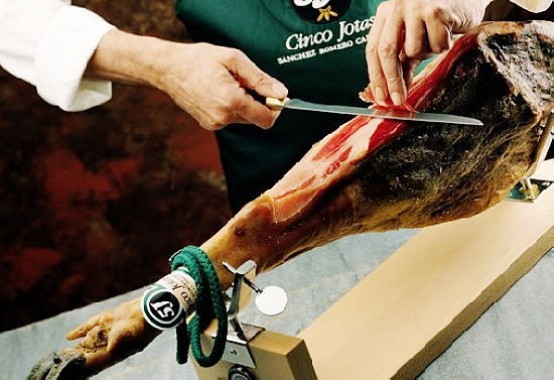
There are also nuances in how to enjoy them. Spaniards have great respect for their Jamón; the best way to eat it is freshly sliced without any additions, at most accompanied by a simple piece of toasted bread, allowing the rich aroma of the ham to fully unfold. When eating Jamón, it is absolutely the star of the show.
Italian Prosciutto acts more like a versatile “socialite”; its soft texture and sweet-savory taste let it blend perfectly with many ingredients. The classic way is rolling it with melon or figs—this salty and sweet combination is truly a summer match made in heaven. It also shines on pizzas, inside paninis, or on platters with cheese and olives, as detailed in the Spanish ham French ham difference.
There is no absolute winner between Spanish ham and Italian ham; each represents a distinct Mediterranean terroir and culinary philosophy. One is passionate and bold; the other is gentle, sweet, and versatile. Which one do you prefer? Feel free to share your own “ham stories” in the comments below!
Let’s all chat about our favorite type of ham!
