For those newly arrived in Spain, have you ever felt overwhelmed when entering a supermarket or market for the first time by the entire row of hanging hams? Seeing labels like “Serrano” and “Ibérico” with prices ranging from tens to hundreds of euros can instantly trigger choice paralysis, leaving you completely unsure where to start! I almost just grabbed the cheapest one and left.
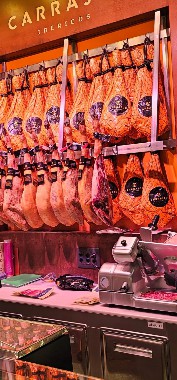
Actually, understanding them is not as East Yuan Ham vs Spanish Ham Differences complicated as it seems; the core difference can be summed up in two words: pig breed. Simply put, Spanish ham mainly falls into two categories: Jamón Serrano and Jamón Ibérico. Serrano ham comes from common white pigs, like Duroc pigs, which have a large yield and affordable price, making it the most common “everyday ham” on Spanish tables. On the other hand, the premium Iberian ham must come from the uniquely Spanish, noble-blooded black pig—the Iberian pig. This pig has black hair and black hooves, hence often called “Pata Negra.” Their muscle and fat distribution differs completely from white pigs, resulting in vastly different flavors.
Internal Grades of Iberian Ham
Think distinguishing black pigs from white pigs is enough? Not quite. Jamón Ibérico has a strict internal “hierarchy” based mainly on the pig’s lineage purity and what it eats, as explained in Differences Between Spanish Hams and Parma Ham. The Spanish Ministry of Agriculture uses four color labels for identification; just look for the label color when buying:
Label Colors Decide Everything
- Black Label: Highest grade! 100% pure Iberian black pigs, fully free-range in oak groves, fed on fallen acorns and natural pastures. This is the true king of hams as detailed in Differences Between Spanish Ham and French Ham, with rich marbling, melting texture, and a distinctive nutty aroma.
- Red Label: Also excellent quality! Pigs with at least 50% or 75% Iberian blood, also free-range in oak groves and raised on acorns.
- Green Label: Pigs with over 50% Iberian blood, pasture-raised and fed a mixed diet of grass and grain feed.
- White Label: Entry-level Iberian ham. Pigs with over 50% Iberian blood, but farmed in enclosures and fed only grain feed.
To make it clearer, here is a simple comparison table:
| Feature | Serrano Ham | Iberian Ham |
|---|
| Pig Breed | Common white pig | Iberian black pig |
| Farming | Enclosed farming, grain feed | Free-range or enclosed, feed varies from acorns, pastures to feed |
| Curing Time | Typically 7-16 months | Typically 24-48 months or longer |
| Appearance | Fat is mostly white, meat is pinkish | Fat is semi-translucent, meat is deep red with abundant marbling |
| Price | Affordable | Expensive, especially black and red labels |
For everyday sandwiches, pairing with melon, or cooking, regular Serrano ham is sufficient and offers great value. If you want to experience the essence of Spanish cuisine or need special gifts or to entertain guests, you must try Iberian ham, especially the red or black labeled ones—they will definitely open a new world of flavors for your palate! What types of ham do you usually buy? Any secret favorite brands? Share in the comments section!
