Are you new to Spain and, like me, feel overwhelmed every time you walk by the ham section in supermarkets? Prices range from just over ten euros per kilogram to several hundred euros for a whole leg, such a big difference! After chatting with local connoisseurs, I found out that this huge price gap comes down to the pig’s “origin” and “diet”. Today, let’s dig into the different rearing methods for Spanish ham pigs.
Pig Breeds: Iberian vs. Serrano
First, it’s important to understand that Spanish ham is divided mainly into two categories. The premium one is called Iberian ham, made from the native Iberian black-hoof pig of Spain. The other is Serrano ham, made from ordinary white pigs, which is produced in larger quantities and priced more affordably, commonly eaten by locals daily. Our focus today is on the more exclusive difference between Dongyuan ham and Spanish ham — the Iberian black pig.
The Peak of an Iberian Pig’s “Life”: Check Out the Labels
Iberian pigs are strictly classified into different grades based on bloodline purity, rearing methods, and diet. This directly affects the flavor and price of the ham. Simply put, the more “luxurious” the pig’s life before slaughter, the more “valuable” it becomes afterward. To regulate the market, the government assigns different colored labels to the various ham grades for easy identification.
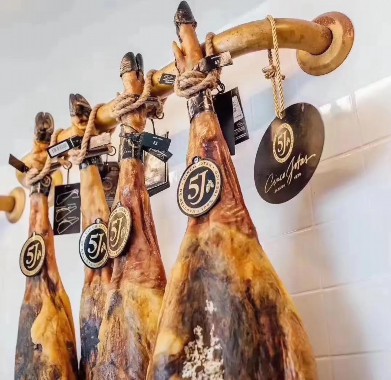
The table below is very clear; feel free to save it for when you buy ham:
| Grade Label | Official Name | Pig’s Diet and Life | Flavor Characteristics |
|---|
| Black | Bellota 100% Ibérico | 100% purebred black pigs freely raised in oak forests, eating only acorns and natural pasture | Rich oily aroma, melts in the mouth, with nutty flavors |
| Red | Bellota Ibérico | At least 50% bloodline mixed black pigs, raised in oak forests, eating acorns and pasture | Exceptional flavor, great value |
| Green | Cebo de Campo Ibérico | Mixed black pigs raised in the fields and woods, fed on grain feed plus some natural food | Good texture with a natural feel, moderately priced |
| White | Cebo Ibérico | Mixed black pigs raised in pens, fed only grain feed. Not all black pigs roam freely | Basic type, primarily salty and savory, most affordable |
So, as you can see in the difference between Spanish ham types, even within Iberian ham, the treatment varies greatly. Only pigs that enter oak forests at the acorn maturation season each autumn and grow to the specified weight by eating acorns, qualify for the “Bellota” level. Their fat infiltrates muscle fibers, creating beautiful marbling, which is the secret behind top-tier ham melting in your mouth and filled with hazelnut aroma.
Next time you visit a ham shop or supermarket, don’t just look at the price. Flip to the area near the ham’s hoof and check out the difference between Spanish ham and French ham little plastic label color to instantly know the grade and approximate flavor. What color ham have you bought before? Which one do you think tastes best? Let’s chat in the comments!
